
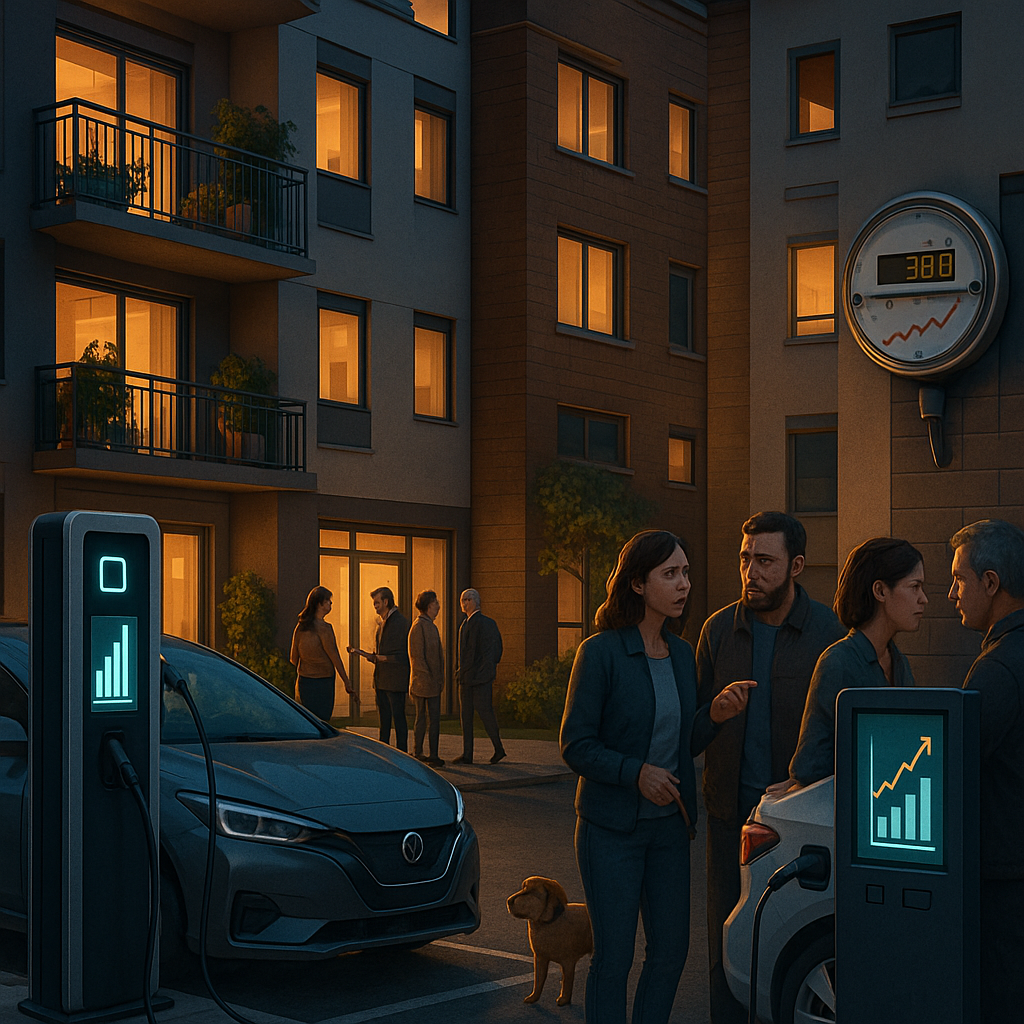
Rising Electricity Costs Are Quietly Eroding Multifamily NOI — EV Charging Is the Blind Spot
Rising Electricity Costs Are Quietly Eroding Multifamily NOI — EV Charging Is the Blind Spot
4:48
Over the last two years, electricity prices across the U.S. have risen steadily. In many markets, they’ve increased faster than inflation. For multifamily owners and operators, that reality is already showing up in operating expenses — whether it’s being tracked closely or not.
At the same time, EV adoption continues to grow. EV charging, which many communities initially deployed as a forward-looking amenity, is now a real operational system. And here’s the issue I see repeatedly: a lot of EV charging was deployed without a plan to manage access or recover electricity costs.
That combination — rising electricity prices and unmanaged EV charging — quietly erodes NOI.
Electricity Prices Are Rising — and Owners Are Absorbing the Cost
Utility costs have always mattered in multifamily, but electricity has become especially volatile. Grid upgrades, peak demand pricing, infrastructure investment, and broader electrification are all pushing rates higher. There’s no clear signal those costs are coming back down.
In most communities, electricity increases can’t be cleanly passed through. They get absorbed, rebudgeted, or offset somewhere else. EV charging complicates this further because usage isn’t evenly distributed.
A small percentage of residents — sometimes just a handful of EV drivers — can consume a disproportionate amount of electricity. Without controls, the property pays for it.
EV Charging Magnifies the Problem
When many properties installed EV chargers, the assumptions were reasonable at the time:
-
EV adoption was lower
-
Electricity was cheaper
-
Usage was light and predictable
Fast forward to today:
-
More EVs per property
-
Longer and more frequent charging sessions
-
Higher electricity rates
What used to feel like a minor amenity cost has turned into a recurring operational expense — one that often isn’t clearly visible at the asset or portfolio level.
The Question Most Properties Aren’t Asking: Who’s Actually Charging?
This is where things tend to break down.
Without access control and clear pricing rules, EV chargers often become:
-
Public chargers in practice
-
Free electricity for non-residents
-
A magnet for ride-share and delivery drivers
We routinely see situations where:
-
Uber and Lyft drivers charge overnight
-
Delivery vehicles use resident chargers
-
Drivers from neighboring communities plug in
-
One EV driver consumes the equivalent electricity of multiple apartments
Meanwhile, residents who don’t drive EVs help subsidize the cost — and onsite teams are left managing complaints they didn’t create.
This isn’t a resident problem. It’s an operational gap.
EV Charging Is No Longer “Just an Amenity”
At this point, EV charging behaves much more like infrastructure than an amenity. It needs to be treated the same way you treat:
-
Parking access
-
Building access
-
Utilities
-
Revenue systems
That means:
-
Defined access rules
-
Clear cost recovery
-
Visibility into usage and spend
-
Controls that scale across a portfolio
“Set it and forget it” doesn’t work anymore — especially as electricity costs continue to rise.
What Well-Run EV Charging Actually Looks Like
Across the properties that are managing this well, a few things are consistent:
-
Only approved residents, guests, or staff can charge
-
Electricity costs are passed to the correct driver
-
Non-resident usage is eliminated or monetized
-
Pricing reflects local electricity rates and peak demand
-
Ownership has visibility into usage and performance
Importantly, this is rarely about buying new chargers.
You Don’t Need to Rip and Replace Your Hardware
One of the biggest misconceptions I hear is that fixing EV charging means replacing chargers. In most cases, that’s simply not true.
At OK2Charge, we work with multifamily owners and operators to put software on existing EV chargers so they can:
-
Control who has access
-
Prevent unauthorized charging
-
Pass electricity costs to the right EV driver
-
Eliminate power leakage from non-residents
-
Protect NOI as utility costs rise
This turns EV charging from an unmanaged expense into a controlled operational system — without unnecessary capex.
The Bottom Line
Electricity costs are rising. EV adoption is accelerating. And unmanaged EV charging quietly erodes NOI every month it goes unchecked.
The communities that do this well won’t be the ones with the most chargers — they’ll be the ones with the best controls.
If you already have EV chargers on your property but don’t have a clear way to manage access or recover electricity costs, this is a software conversation — not a hardware one.
Reach out to our team to learn how OK2Charge can be added to your existing chargers and help you regain control.